

Affiliate disclosure: This article contains affiliate links. If you buy through these links, we may earn a commission at no extra cost to you.
The signs of low bone density are easy to miss because bone loss usually does not feel like much while it is happening. Many people feel normal until a bone breaks after a small fall, a sudden twist, or even a hard cough. That is what makes low bone density frustrating. The body can be giving you clues, but the loudest warning often comes late.
Low bone density means your bones have less mineral content than expected. When the loss becomes severe enough, it may be diagnosed as osteoporosis. A milder form is often called osteopenia. Neither label should be ignored, but neither means you are helpless. The goal is to spot risk early, ask for the right test, and start taking bone health seriously before a fracture changes your life.
Signs of low bone density are often quiet at first
Here is the honest answer: low bone density often has no obvious symptom. MedlinePlus and the National Institute on Aging both describe osteoporosis as a silent disease because many people do not know they have it until they break a bone. That does not mean there are no clues. It means the clues are indirect.
Get Weekly Health Tips
Join thousands getting evidence-based wellness insights delivered free every week.
🔒 No spam. Unsubscribe anytime.
The biggest warning sign is a fracture that happens too easily, especially after age 50. A wrist fracture from a simple fall, a compression fracture in the spine, or a hip fracture after what seemed like a minor accident should raise the question of bone strength. The fracture is not just an injury. It can be a clue that the bone was weaker than expected.
Want a structured bone health plan?
The Bone Density Solution focuses on practical nutrition and lifestyle steps for people who want to support stronger bones.
Affiliate link. We may earn a commission at no extra cost to you.

7 signs of low bone density to take seriously
1. A broken bone after a minor fall
A fracture after a low-impact fall is one of the clearest red flags. Healthy bones can still break, of course, but a break from a small trip, bump, or twist deserves follow-up. Ask your clinician whether a bone density scan makes sense, especially if you are over 50 or have other risk factors.
2. Losing height over time
Height loss can happen with aging, but noticeable loss may point to compression fractures in the spine. MedlinePlus lists losing a half inch or more in one year as a reason some people may need a bone density scan. If your clothes fit differently, your pants seem longer, or your measured height keeps dropping, do not brush it off.
3. New rounding in the upper back
A more rounded upper back can develop when small spinal fractures change posture. This is not the same as ordinary slouching after a long day at a desk. If your posture has changed noticeably, or family members keep mentioning it, it is worth discussing with a medical professional.
4. Back pain after a small movement
Sudden back pain after lifting something light, coughing, bending, or turning can sometimes come from a vertebral compression fracture. Back pain has many causes, and most are not osteoporosis. Still, pain that appears suddenly after a small movement, especially in an older adult, should be checked.
5. A family history of osteoporosis or hip fracture
Family history is not a symptom, but it is a strong clue. If a parent had osteoporosis or broke a hip, your own risk may be higher. This is one of those details people forget to mention during routine visits, yet it can change whether screening is recommended earlier.
6. Long-term medication or medical risk factors
Certain medicines and conditions can speed bone loss. Long-term corticosteroid use, some seizure medicines, proton pump inhibitors, rheumatoid arthritis, digestive diseases, eating disorders, hormone changes, smoking, heavy alcohol use, and long periods of inactivity are all worth bringing up with your clinician. The point is not to panic. It is to connect the dots.
7. You are in a higher-risk age group
Risk rises with age. Women after menopause are especially vulnerable because bone loss can speed up for several years. Men can develop low bone density too, and by the late 60s or 70s, bone loss matters for everyone. If you are a woman 65 or older, or a man 70 or older, screening is commonly discussed even without symptoms.
When signs of low bone density mean you should ask about a DXA scan
A DXA scan, sometimes written as DEXA, is the standard test used to measure bone mineral density. It is a low-dose X-ray that usually checks the hip and spine. The scan can help diagnose osteopenia or osteoporosis, estimate fracture risk, and track whether treatment is working.
You should ask about a DXA scan if you have had a fracture after age 50, have lost height, have a parent with osteoporosis or hip fracture, have used corticosteroids for a long time, smoke, drink heavily, have very low body weight, or have a medical condition linked with bone loss. Women 65 and older are often advised to be screened. Men 70 and older, and younger men with risk factors, should also ask.
A scan is not something to fear. The Bone Health and Osteoporosis Foundation describes DXA testing as non-invasive and painless. It takes only a few minutes, and you usually stay clothed as long as there are no zippers or buttons over the scan area.
Building bone strength takes a system
If you want help organizing food, movement, and daily habits around bone health, this program is worth reviewing.
Review The Bone Density Solution
Affiliate link. We may earn a commission at no extra cost to you.
What low bone density does not always look like
Low bone density does not always look like frailty. A person can walk daily, eat reasonably well, and still have weak bones. A person can also have normal blood calcium levels and still have low bone density, because the body tightly regulates calcium in the blood. That is why guessing is a poor strategy.
It is also not only a women's issue. Women are at higher risk, especially after menopause, but men get osteoporosis too. Men are often diagnosed later because they may not think to ask about screening until a fracture happens.
Do not rely on pain as your warning system. Bone loss itself usually does not hurt. Pain tends to show up when there is a fracture, posture change, or another complication. By then, the problem may have been developing quietly for years.
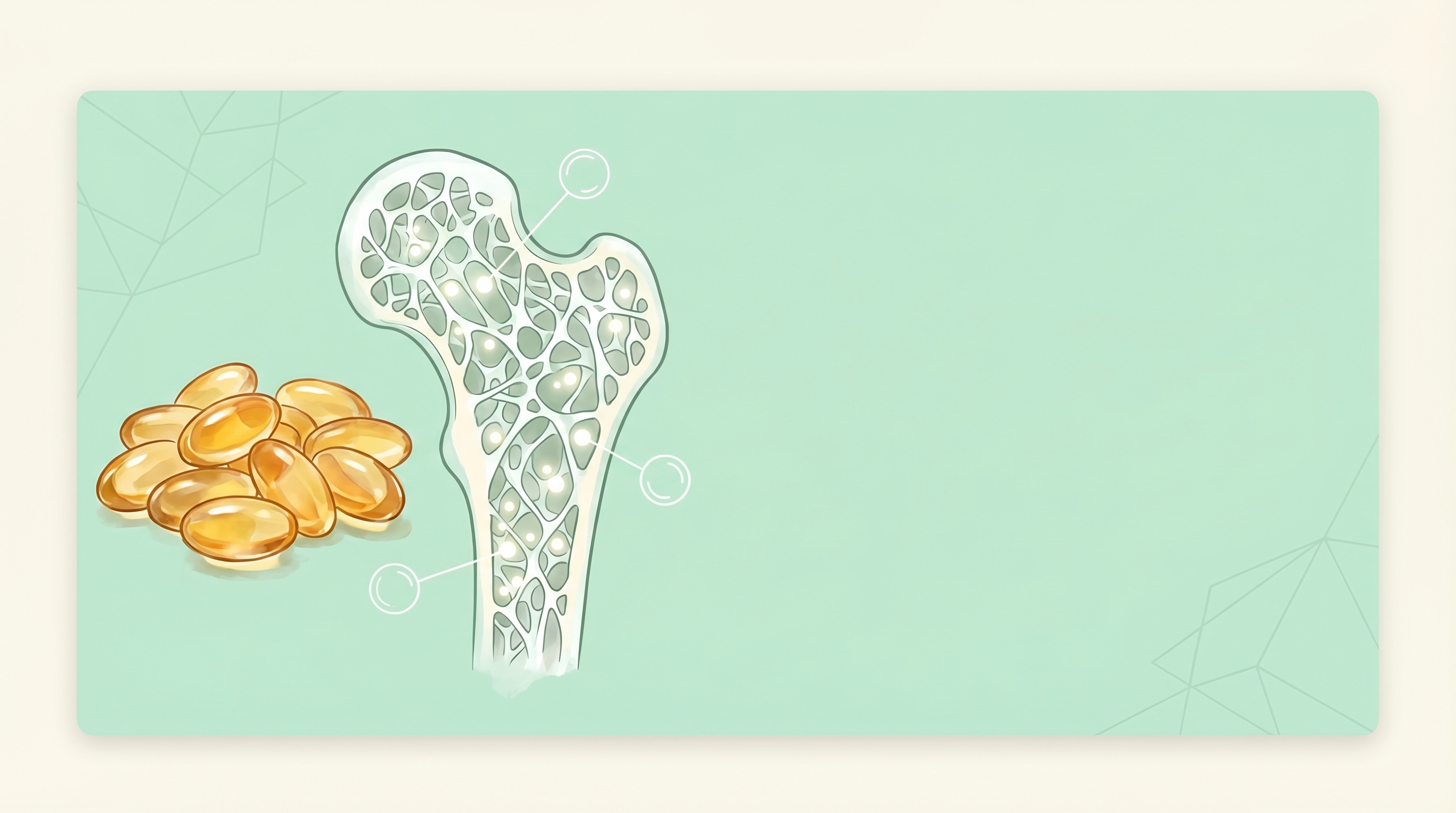
How to support stronger bones once you know your risk
The first step is medical clarity. If your risk is high, ask about a DXA scan, vitamin D testing, medication review, and whether you need treatment. Some people need prescription medication to reduce fracture risk. Others may be told to focus on lifestyle and repeat testing later. That decision belongs with your clinician.
Daily habits still matter. Calcium, vitamin D, enough protein, resistance training, weight-bearing exercise, not smoking, and limiting alcohol all support bone health. Walking is useful, but bones also respond to safe strength work. For many adults, that means simple resistance exercises, balance training, and progressive loading under guidance.
Food is the base. Dairy, fortified foods, canned salmon or sardines with bones, tofu made with calcium, leafy greens, beans, and nuts can all help. Vitamin D is harder to get from food alone, which is why many people ask their clinician about testing and supplementation. More is not always better, especially with supplements, so use lab results and medical advice instead of guessing.
If you already have osteopenia or osteoporosis, fall prevention becomes part of bone care. Check vision, review medications that cause dizziness, improve lighting, remove loose rugs, add grab bars where needed, and work on balance. Preventing the fall can be just as important as strengthening the bone.
Bottom line on signs of low bone density
The most important thing to know about the signs of low bone density is that they may not feel dramatic. A minor fracture, height loss, posture change, sudden back pain, family history, and risk factors are enough reason to ask better questions. Waiting for a major fracture is a bad screening plan.
If something on this list sounds familiar, bring it to your next appointment and ask whether a DXA scan makes sense. Bone density is measurable. Risk can be reduced. The earlier you know where you stand, the more options you have.
Next step for your bone health routine
Use your scan results and medical advice first. Then consider a guided plan for the habits that support long-term bone strength.
Affiliate link. We may earn a commission at no extra cost to you.
Sources
- MedlinePlus: Osteoporosis
- MedlinePlus: Bone density
- MedlinePlus: Bone density scan
- National Institute on Aging: Osteoporosis
- Bone Health and Osteoporosis Foundation: Bone density testing
Internal reading: Learn more about supplements for bone density, the difference between osteopenia and osteoporosis, vitamin K2 for osteoporosis, and natural ways to increase bone density.