
Affiliate disclosure: This article contains affiliate links. If you buy through one of these links, Your Wealthy Healthy Life may earn a commission at no extra cost to you.
If you have been told your bones are thinning, you have probably heard about calcium and vitamin D. But there is a quieter player in bone health that researchers keep finding in study after study: vitamin K2. It does not get the same attention, and that is a problem, because the evidence behind it is stronger than most people realize.
Osteoporosis affects roughly 200 million women worldwide, and the standard advice has not changed much in decades: take calcium, get some sun, do weight-bearing exercise. Those things matter. But a growing pile of clinical trials suggests that vitamin K2 for osteoporosis might be one of the missing pieces in how we think about bone loss and how to slow it down.
Looking for a Complete Bone Density Solution?
If you are serious about protecting your bones, a targeted approach that combines the right nutrients in the right amounts can make a real difference.
What Vitamin K2 Actually Does for Your Bones
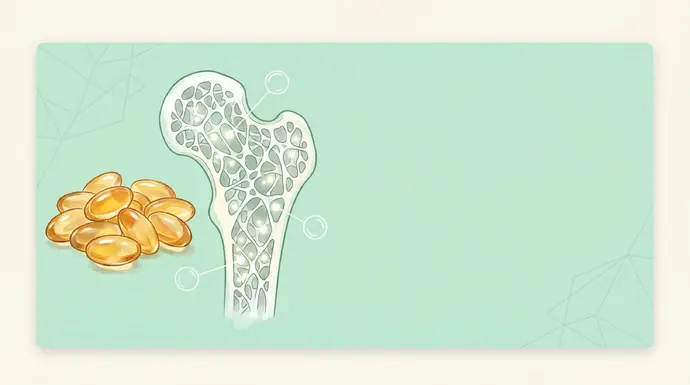
Vitamin K2 (menaquinone) activates two proteins that matter directly for bone health. The first is osteocalcin, which osteoblasts produce to help bind calcium into the bone matrix. Without enough K2, osteocalcin stays inactive, meaning calcium floats around in your bloodstream instead of locking into bone where it belongs.
Get Weekly Health Tips
Join thousands getting evidence-based wellness insights delivered free every week.
🔒 No spam. Unsubscribe anytime.
The second protein is matrix Gla protein (MGP), which keeps calcium out of your arteries and soft tissues. This is the dual benefit that makes K2 interesting: it helps route calcium to bone and away from places it causes harm.
Think of it this way. Calcium is the building material. Vitamin D makes sure you absorb it. Vitamin K2 acts like the traffic director, telling that calcium where to go. Without the traffic director, the material just piles up wherever it lands.
The Research: What Clinical Trials Actually Show
Here is where things get specific. Multiple randomized controlled trials have looked at vitamin K2 for osteoporosis, and the results are worth paying attention to.
The 3-Year Dutch Trial (MK-7)
A well-designed 3-year randomized, placebo-controlled trial published in Osteoporosis International gave 142 postmenopausal women with osteopenia either 375 mcg of MK-7 daily or a placebo. The K2 group showed significantly less decline in bone mineral density and bone strength measures compared to placebo. This was not a marginal result. The researchers found measurable differences in both bone mineral content and bone microarchitecture.
Another study from the Netherlands tracked postmenopausal women taking 180 mcg of MK-7 daily for three years. Even at this lower dose, the supplement significantly decreased the age-related decline in bone mineral density and bone strength compared to the control group.
The Japanese High-Dose Studies (MK-4)
In Japan, doctors have prescribed vitamin K2 (as MK-4) at 45 mg per day for osteoporosis treatment since the early 2000s, and the research behind this is substantial. A meta-analysis pooling results from multiple randomized controlled trials found that this dosage increased bone mineral density at the lumbar spine and forearm, while reducing levels of undercarboxylated osteocalcin, a marker that indicates poor vitamin K status.
A dose-finding study in Japan determined that 45 mg/day was the minimum effective dose for improving bone mass in postmenopausal women with established osteoporosis. At this level, several trials showed not just slower bone loss but actual increases in bone density and reductions in fracture incidence.
The 2025 Meta-Analysis
A systematic review and meta-analysis published in Frontiers in Endocrinology in 2025 examined the effects of vitamin K2 supplementation on bone turnover markers in postmenopausal women with osteoporosis. The analysis pooled data from multiple RCTs and concluded that K2 supplementation had a beneficial effect on key bone formation markers while reducing bone resorption indicators.
Struggling With Bone Loss? You Are Not Alone.
Getting the right combination of bone-supporting nutrients matters more than most people realize. The Bone Density Solution takes a different approach to rebuilding bone strength.
MK-4 vs. MK-7: Which Form of K2 Is Better?
This comes up a lot. Vitamin K2 comes in several forms, but the two studied most for bone health are MK-4 (menatetrenone) and MK-7.
MK-4 is the form used in the Japanese clinical trials at high doses (45 mg/day). It has a shorter half-life in the body, around 1-2 hours, which is why it needs to be taken in larger amounts. Most of the fracture-reduction data comes from MK-4 studies.
MK-7 has a much longer half-life, roughly 2-3 days, so it builds up in the bloodstream with consistent daily dosing. The Dutch and Chinese trials used MK-7 at much lower doses (90-375 mcg/day) and still showed meaningful effects on bone density and strength. MK-7 is what you will find in most supplements sold in the US and Europe.
Both forms work. The research supports both. If you are going the supplement route, MK-7 is more practical because the doses are smaller and easier to take consistently. If you are working with a doctor who follows the Japanese protocol, they may prefer MK-4 at therapeutic doses.
How Vitamin K2 Works With Vitamin D3 and Calcium
This trio is worth understanding together, because they function as a system.
Calcium provides the raw material for bone. Vitamin D3 increases intestinal absorption of calcium so more of what you eat actually makes it into your bloodstream. Vitamin K2 activates osteocalcin, which deposits that calcium into bone tissue.
Without adequate K2, taking high doses of calcium and vitamin D can actually be counterproductive. More calcium in your blood does not automatically mean more calcium in your bones. It can mean more calcium in your artery walls, which is the last place you want it. A 2024 comprehensive review published in Nutrients examined combined vitamin D and K supplementation in postmenopausal women and found that the combination produced better bone outcomes than either nutrient alone.
This is not theoretical. It is the mechanism that explains why some people take calcium faithfully and still lose bone. The calcium was there, but the K2 was not.
Foods That Contain Vitamin K2
If you want to get K2 from food rather than supplements, the options are somewhat limited, which is part of why deficiency is common.
- Natto (fermented soybeans): By far the richest source, providing around 1,000 mcg of MK-7 per serving. A staple in Japan but not common in Western diets.
- Hard cheeses (Gouda, Brie, Edam): Contain moderate amounts of MK-8 and MK-9. Gouda is particularly good.
- Egg yolks from pasture-raised chickens: Small but meaningful amounts of MK-4.
- Goose liver and chicken liver: Decent MK-4 content.
- Grass-fed butter and dark meat chicken: Trace to moderate amounts.
The reality is that most people eating a standard Western diet get very little K2. Even people who eat reasonably well often fall short, because the best sources are specific fermented foods and animal products from grass-fed animals. This is one reason supplementation has become a focus in bone health research.
Who Benefits Most From Vitamin K2 Supplementation?
The research is strongest for these groups:
Postmenopausal women. This is where the vast majority of clinical trials have focused. The drop in estrogen after menopause accelerates bone loss, and K2 supplementation has shown measurable benefits in slowing that process across multiple studies.
People with osteopenia. The 3-year Dutch trial specifically targeted women with osteopenia (the stage before osteoporosis) and found that K2 helped prevent further decline. Catching bone loss early gives K2 more to work with.
People already taking calcium and vitamin D. If you are supplementing calcium and D but not K2, you may not be getting the full benefit, and you may be leaving calcium in your arteries rather than your bones.
Anyone on long-term warfarin or similar blood thinners. These medications work by blocking vitamin K, which can have downstream effects on bone. This is a conversation to have with your doctor, because the interaction requires careful management.
Recommended Dosage Based on the Evidence
The right dose depends on which form you are using and what you are trying to accomplish.
For MK-7 (the more common supplement form): the research supports 90 to 375 mcg per day for bone health. The lower end (90-180 mcg) is more of a maintenance dose, while the higher doses used in clinical trials showed stronger effects.
For MK-4 at therapeutic doses: 45 mg per day, as used in the Japanese medical protocol. This is a prescription-level dose and should be done under medical supervision.
Most people taking K2 for bone health as a preventive measure use somewhere between 100 and 200 mcg of MK-7 daily, which is consistent with the lower end of the clinical trial range.
Ready to Take Action on Your Bone Health?
The right nutrients in the right combination can make a real difference in how your bones respond. See what a targeted bone health approach looks like.
Safety and Side Effects
Vitamin K2 is generally well tolerated. The clinical trials reported no significant adverse effects at the doses studied, even over multi-year periods.
The main caution is for people taking anticoagulant medications like warfarin (Coumadin). Vitamin K directly interferes with how these drugs work, so any K2 supplementation needs to be discussed with the prescribing doctor. This is not a minor interaction. It can change your INR levels and affect clotting.
For people not on blood thinners, the safety profile is strong. Unlike fat-soluble vitamins A and D, vitamin K does not appear to accumulate to toxic levels with regular supplementation at typical doses.
What to Look for in a K2 Supplement
If you decide to supplement, a few things matter:
- Choose MK-7 unless a doctor specifically recommends MK-4. The longer half-life makes it more practical.
- Look for doses between 100-200 mcg per serving for general bone support. Higher doses (up to 375 mcg) are used in clinical settings.
- Take it with a fat-containing meal. K2 is fat-soluble, so absorption improves significantly when taken with dietary fat.
- Pair it with vitamin D3 and adequate calcium intake. The three nutrients work as a system.
The Bottom Line
The research on vitamin K2 for osteoporosis is not speculative. Multiple randomized controlled trials, meta-analyses, and years of clinical use in Japan point to a real benefit. K2 helps direct calcium into bone, activates the proteins that build bone matrix, and works synergistically with vitamin D and calcium in ways that standard supplementation misses.
If you are dealing with bone loss or trying to prevent it, ignoring K2 means leaving a documented tool on the table. It is not a replacement for calcium, vitamin D, or exercise. It is the piece that makes all of those work better together.
For a more comprehensive look at natural approaches to building stronger bones, check out our guide on how to increase bone density naturally. If joint pain is part of the picture alongside bone concerns, our article on natural remedies for hip pain covers complementary approaches that address both issues. And for understanding the broader nutrient picture, our breakdown of the best ingredients for joint and bone support goes deeper on what the research supports.
This post contains affiliate links. If you purchase through our links, we may earn a commission at no extra cost to you. We only recommend products we believe in.
Disclaimer: This article is for informational purposes only and does not constitute medical advice. Always consult with a healthcare professional before starting any new supplement, especially if you take prescription medications.