
Disclosure: This article contains affiliate links. If you purchase through our links, we may earn a commission at no extra cost to you. We only recommend products supported by research.
The question of whether turmeric for joint pain actually works has moved from alternative health circles into mainstream conversation. Walk into any health food store and you will find dozens of turmeric capsules, turmeric teas, and turmeric tinctures all promising to calm aching joints and reduce inflammation. Some of it is marketing. But a fair amount of the research is real.
But does the science actually back that up? And if turmeric works, are you taking it the right way - or wasting your money on a form your body can barely absorb?
This article breaks down what the clinical research actually shows, the correct dosage, the critical bioavailability issue most people miss, and what realistic results look like after a few weeks of consistent use.
Dealing with ongoing joint pain and stiffness?
Complete Joint Care combines curcumin with glucosamine, chondroitin, and Boswellia - the ingredients clinical research supports most for cartilage protection and lasting pain relief.
What Is Curcumin and Why Does It Matter for Joint Pain?
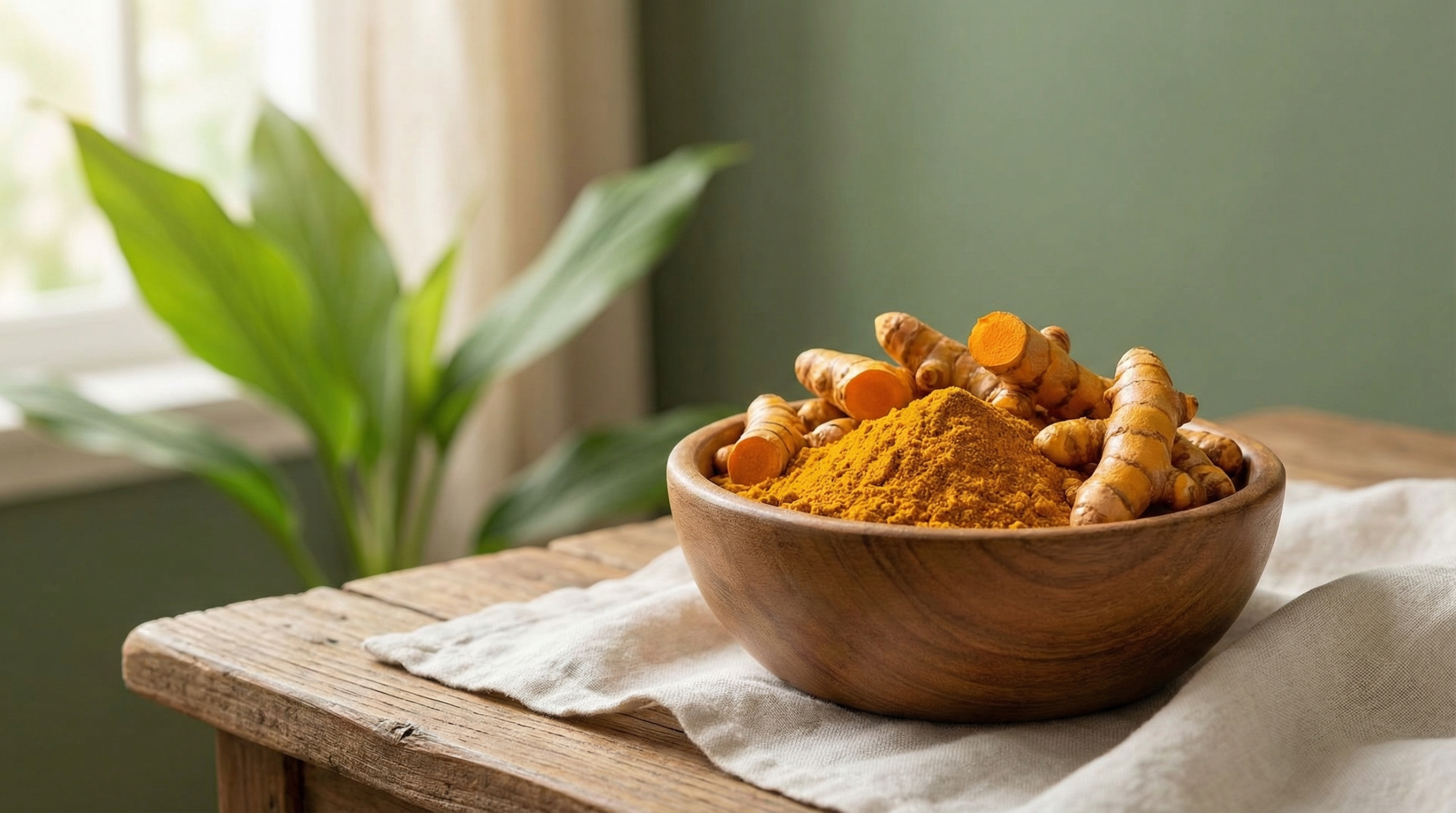
Turmeric is the yellow spice that gives curry its color. Its active ingredient is curcumin, which makes up roughly 2-3% of turmeric powder by weight. When researchers study turmeric's effects on inflammation and joint health, they are almost always studying concentrated curcumin extracts - not plain turmeric powder.
Get Weekly Health Tips
Join thousands getting evidence-based wellness insights delivered free every week.
🔒 No spam. Unsubscribe anytime.
Curcumin works by blocking specific inflammatory pathways in the body. Two of the most studied are NF-kB (nuclear factor kappa B), a signaling protein that switches on hundreds of genes involved in inflammation, and COX-2, the same enzyme targeted by prescription anti-inflammatory drugs. By suppressing both of these, curcumin hits inflammation at the source rather than just masking symptoms.
It also has antioxidant properties, which helps protect joint tissue from oxidative damage - the kind that accumulates over time with arthritis and age-related wear.
What the Clinical Research Shows About Turmeric for Joint Pain
This is where it gets interesting. Multiple controlled trials have compared curcumin directly to standard anti-inflammatory medications, and the results are worth knowing about.
A widely cited 2014 study published in Clinical Interventions in Aging followed patients with knee osteoarthritis over four weeks. One group received 1,500 mg of curcumin extract daily. The other received 1,200 mg of ibuprofen daily. The result: both groups showed similar improvements in pain, stiffness, and physical function scores. But the curcumin group reported significantly fewer gastrointestinal side effects - a common problem with long-term NSAID use.
A 2021 meta-analysis in the Journal of Medicinal Food reviewed multiple randomized trials on curcumin for knee osteoarthritis and concluded that curcumin supplementation "significantly reduced pain and physical function impairment" compared to placebo, with an effect size comparable to NSAIDs.
Results are most consistent for:
- Osteoarthritis of the knee
- Rheumatoid arthritis (reduced morning stiffness and swollen joints)
- General inflammatory joint conditions
Evidence is weaker for acute injuries and post-surgical joint pain, where ibuprofen or prescription anti-inflammatories still perform better.
For more on which specific nutrients support joint cartilage, see our breakdown of the best ingredients for joint pain relief.
The Bioavailability Problem (And the Fix)
Here is the single most important thing most people miss: curcumin is poorly absorbed by the body on its own.
When you swallow plain curcumin, most of it passes through the digestive tract before it can enter the bloodstream in any meaningful amount. This is why many people take turmeric supplements for weeks and feel nothing - the product may have had adequate curcumin on paper, but their body barely absorbed it.
The well-researched fix is piperine, the active compound in black pepper. A landmark 1998 study published in Planta Medica by Shoba et al. showed that adding just 20 mg of piperine to 2 grams of curcumin increased curcumin bioavailability by 2,000% in human subjects.
When shopping for a curcumin supplement, look for one that:
- Contains BioPerine (standardized piperine extract) or equivalent
- Uses standardized curcuminoid extract (not plain turmeric powder)
- Provides at least 500 mg of curcuminoids per serving
Some supplements use phospholipid-bound curcumin (like Meriva) or nanoparticle delivery systems, both of which also significantly improve absorption. Either approach works - what matters is that some absorption enhancer is present.
Correct Dosage for Joint Pain
Dosage matters more than most supplement labels suggest. Here is what the research actually used in studies showing meaningful results:
- Minimum effective dose: 500 mg of curcuminoids per day (with piperine)
- Typical therapeutic dose: 1,000-1,500 mg of curcuminoids per day
- Upper safe limit (research-backed): 8,000 mg/day has been used in some trials without serious adverse effects, but most people do not need anywhere near that
Plain turmeric powder provides about 20-30 mg of curcumin per teaspoon. To hit 1,000 mg of curcumin from food alone, you would need 30+ teaspoons of turmeric daily - impractical and not worth attempting.
If you have been cooking with turmeric and expecting joint pain relief, that is unfortunately not how it works. The amounts in food are too small. A quality supplement is the only practical delivery method.
Why Single-Ingredient Turmeric Often Disappoints
Joint pain usually has multiple drivers: inflammation, cartilage breakdown, and poor connective tissue support. Complete Joint Care targets all three with a formula built around curcumin, glucosamine, chondroitin, and Boswellia - the combination that clinical research backs for meaningful, lasting results.
What to Look for Beyond Turmeric in a Joint Supplement
Curcumin is the most researched natural anti-inflammatory, but the best joint supplements pair it with ingredients that address other aspects of joint health. If you are evaluating products, here is what the evidence supports:
Glucosamine and Chondroitin: These are structural components of cartilage. Meta-analyses, including the GAIT trial published in the New England Journal of Medicine, found that the combination significantly reduced pain in patients with moderate-to-severe knee osteoarthritis. They work best for cartilage protection and slowing structural damage rather than reducing acute inflammation.
Boswellia Serrata: An Indian herb with strong anti-inflammatory evidence. A 2008 study in Arthritis Research & Therapy found that a proprietary Boswellia extract reduced pain by 32% and improved function by 49% in knee osteoarthritis patients after 90 days. It is often underrated compared to turmeric but works through a different pathway (5-LOX inhibition), which is why combining them tends to produce better results.
MSM (Methylsulfonylmethane): A sulfur compound naturally present in some foods. Several trials have shown it reduces joint pain and swelling, though the evidence base is smaller than for glucosamine or curcumin. Generally well-tolerated and worth including.
For related reading, check out our guide on glucosamine vs collagen for joint pain to understand which cartilage-support approach fits your situation best.
Safety: Who Should Be Cautious
Turmeric and curcumin are well-tolerated by most healthy adults. At standard doses (up to 1,500 mg curcuminoids per day), the most common side effects are mild digestive upset, nausea, or diarrhea - usually dose-dependent and not serious.
However, you should consult a doctor before starting curcumin if any of these apply:
- Blood thinners: Curcumin can enhance the effect of warfarin and other anticoagulants, increasing bleeding risk
- Gallbladder disease: Curcumin stimulates bile production, which can worsen gallstone symptoms
- Diabetes medications: Curcumin can lower blood sugar; combining it with diabetes medication may cause hypoglycemia
- Scheduled surgery: Stop turmeric supplementation at least two weeks before surgery due to blood-thinning properties
- Iron-deficiency anemia: High doses may inhibit iron absorption
Pregnant women should also avoid high-dose curcumin supplements, as the safety data at therapeutic doses is limited.
Realistic Expectations: What Actually Changes and When
This is the part that most supplement marketing skips entirely. Here is an honest timeline based on what studies actually measured:
Weeks 1-2: Most people notice little to nothing. Curcumin needs time to build up and begin consistently suppressing inflammatory pathways. Some people with significant gut inflammation notice easier digestion first.
Weeks 3-4: The first signs of improvement typically show up here - reduced morning stiffness, slightly less soreness after activity, better range of motion in affected joints. The 2014 ibuprofen comparison study saw meaningful differences at the four-week mark.
Weeks 6-8: If the supplement is going to work for you, this is when results become clearly noticeable. Pain levels tend to be lower and more stable. Physical function scores in clinical trials improved most significantly in the 6-8 week range.
3 months and beyond: This is the territory where cartilage-support ingredients (glucosamine, chondroitin) start showing structural benefits. Anti-inflammatory benefits can be maintained with continued use.
What curcumin does not do: reverse arthritis structurally on its own, regenerate lost cartilage, or eliminate pain completely in severe cases. The goal is meaningful symptom reduction and slowing progression - and on those measures, the evidence is genuinely solid.
If you are also dealing with joint stiffness first thing in the morning, our article on joint stiffness in the morning covers additional approaches that work well alongside supplementation.
The Bottom Line
Turmeric for joint pain is not hype. It is one of the better-researched natural options for reducing inflammation and improving joint function, particularly for osteoarthritis and chronic inflammatory conditions. The clinical evidence, including direct comparisons to ibuprofen, holds up.
Here is what actually matters:
- You need a concentrated curcuminoid extract, not plain turmeric powder from the spice rack
- Piperine (black pepper extract) is non-negotiable for absorption - without it, most curcumin passes through unused
- Therapeutic dose is 500-1,500 mg of curcuminoids per day
- Results take 4-8 weeks - it is not a painkiller, it is an anti-inflammatory that works gradually
- Combining curcumin with glucosamine, chondroitin, and Boswellia addresses more of the joint pain picture than curcumin alone
Ready to Take a Smarter Approach to Joint Health?
Complete Joint Care combines curcumin with BioPerine for absorption, plus glucosamine, chondroitin, and Boswellia - the full-spectrum approach that addresses inflammation, cartilage, and mobility at the same time.
Sources
- Kuptniratsaikul V, et al. (2014). Efficacy and safety of Curcuma domestica extracts compared with ibuprofen in patients with knee osteoarthritis. Clinical Interventions in Aging, 9, 451-458.
- Shoba G, et al. (1998). Influence of piperine on the pharmacokinetics of curcumin in animals and human volunteers. Planta Medica, 64(4), 353-356.
- Henrotin Y, et al. (2021). Curcumin and Boswellia serrata for osteoarthritis. Journal of Medicinal Food.
- Kimmatkar N, et al. (2008). Boswellia serrata for osteoarthritis of the knee. Arthritis Research and Therapy.
- Clegg DO, et al. (2006). Glucosamine, chondroitin sulfate, and the two in combination for painful knee osteoarthritis (GAIT trial). New England Journal of Medicine, 354(8), 795-808.
Disclaimer: This article is for informational purposes only and does not constitute medical advice. Always consult a qualified healthcare professional before starting any new supplement, especially if you have existing health conditions or take medications.