
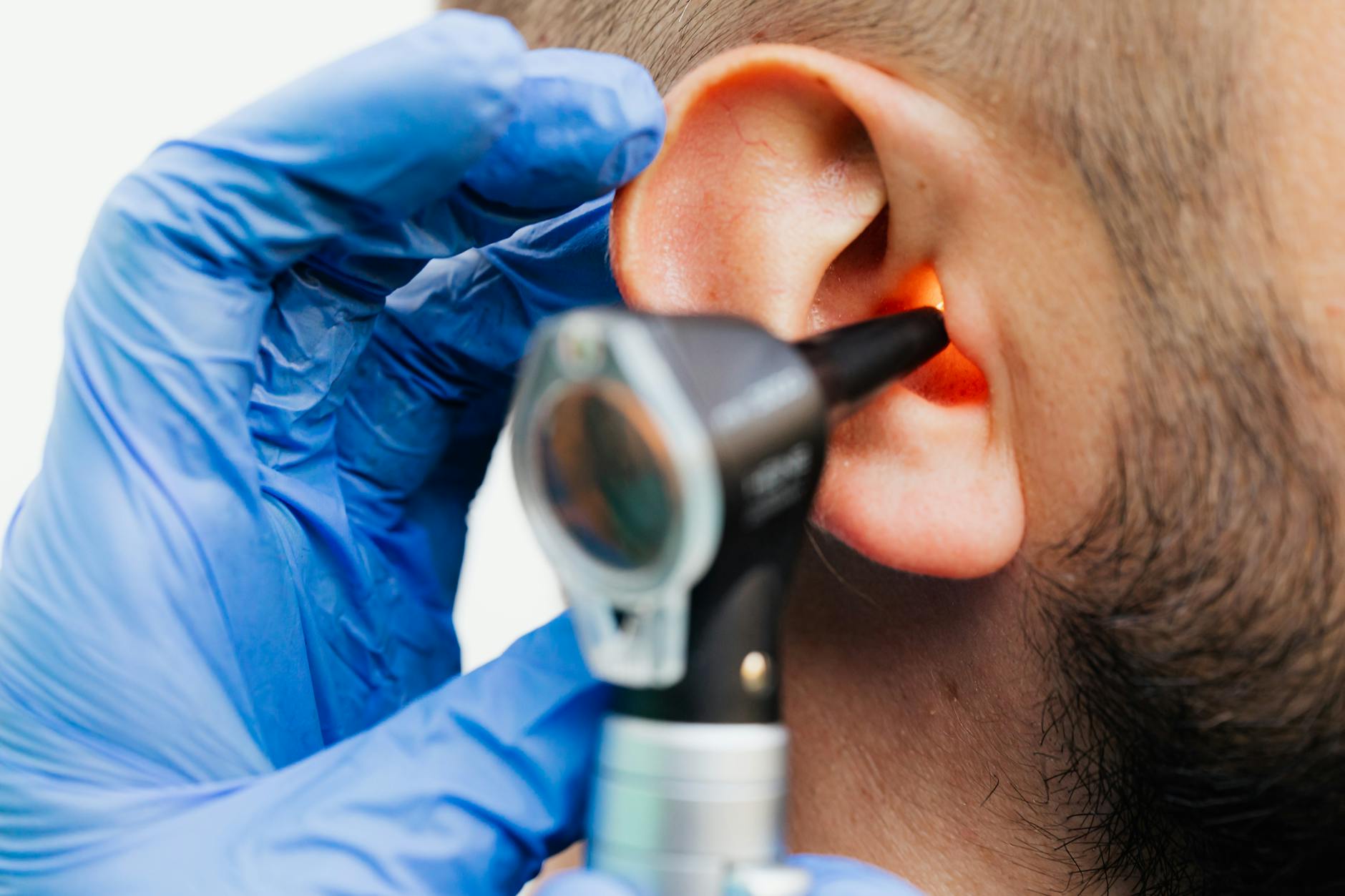
You wake up with a persistent ringing in your ears - and your jaw aches at the same time. It seems like a strange coincidence, but it may not be one at all.
Can TMJ cause ringing in the ears? Yes, it can. Research shows that up to 30-40% of people with temporomandibular joint (TMJ) disorders experience tinnitus as a direct result of jaw dysfunction. This type of ear ringing is called somatic tinnitus, and it is different from noise-induced or age-related tinnitus in one key way: it is often reversible when the underlying jaw problem is addressed.
This guide covers the anatomy behind the connection, the symptoms that distinguish TMJ tinnitus, and the treatment approaches with the strongest evidence behind them.
Dealing With Persistent Ear Ringing?
If your tinnitus comes and goes with jaw pain or facial tension, targeted nutritional support may help quiet the nervous system signals driving the noise. AudiSoothe is formulated specifically to support hearing health and reduce the perception of ringing from the inside out.
The Anatomy: Why Your Jaw and Ear Are Connected
Most people think of the jaw and ear as completely separate structures, but they share a surprisingly tight anatomical relationship. The temporomandibular joint sits directly in front of the ear canal - close enough that you can feel it move when you place a finger just in front of your ear and open your mouth.
Get Weekly Health Tips
Join thousands getting evidence-based wellness insights delivered free every week.
🔒 No spam. Unsubscribe anytime.
That proximity alone creates opportunity for cross-influence, but two deeper connections explain why TMJ problems so consistently produce ear symptoms.
The Disco-Malleolar Ligament
A small but significant ligament called the disco-malleolar ligament physically connects the jaw joint to the malleus, one of the three tiny bones inside the middle ear responsible for transmitting sound vibrations. When the TMJ is inflamed or misaligned, tension travels through this ligament directly into the middle ear - altering how sound is processed and generating phantom sounds the brain registers as ringing.
The Trigeminal Nerve
The trigeminal nerve is the largest cranial nerve and the primary sensory nerve for the face and jaw. It serves the muscles used for chewing and biting, but its pathways also branch into auditory processing centers in the brainstem. Chronic muscle tension from TMJ dysfunction creates constant low-level signals through the trigeminal pathway, and those signals can bleed into the auditory system - producing or amplifying tinnitus.
How Common Is Tinnitus in TMJ Patients?
The overlap between TMJ disorders and tinnitus is well documented. Studies published in journals indexed by the National Institutes of Health (NIH) consistently find tinnitus rates among TMD patients ranging from 25% to 40%, compared to roughly 10-15% in the general adult population. That is a two to three times higher prevalence, which is not a coincidence.
The American Tinnitus Association recognizes TMJ dysfunction as one of the most common somatic (body-based) causes of tinnitus - meaning it originates from musculoskeletal dysfunction rather than from the auditory system itself.
This distinction matters enormously for treatment. If your tinnitus has a somatic cause, treating the jaw often reduces or eliminates the ringing. Standard tinnitus treatments aimed at the auditory system - like white noise therapy or cochlear interventions - address the symptom but not the source.
How to Tell If Your Tinnitus Is TMJ-Related
The clearest diagnostic sign of somatic tinnitus from the jaw is the ability to change the ringing by moving your jaw or applying pressure around the joint. Audiologists and ENT specialists use this test routinely.
Try this self-test:
- Clench your teeth firmly for five seconds, then release. Does the ringing get louder, softer, or change pitch?
- Open your mouth as wide as comfortably possible. Does the ringing shift?
- Press your fingers gently into the jaw joint area just in front of each ear. Does the sound change?
If any of these movements alter the tinnitus, that is a strong indicator of somatic involvement - and a reason to pursue jaw-focused treatment rather than (or in addition to) auditory treatment.
Other Symptoms That Point to TMJ as the Cause
- Ear pain or a feeling of pressure without any ear infection or visible cause
- A sense of fullness or blockage in the ear that comes and goes with jaw tension
- Clicking, popping, or grinding sounds when you open or close your mouth
- Morning jaw pain or headaches, especially if you grind or clench during sleep (bruxism)
- Facial pain that runs from the jaw up toward the temple or down into the neck
- Tinnitus that is worse first thing in the morning or after eating (both periods of jaw use)
These symptoms together make a compelling case for a TMJ evaluation - ideally with a dentist or oral surgeon who specializes in temporomandibular disorders, or with a physical therapist trained in orofacial therapy.
Treatment Approaches That Actually Work
Because TMJ-related tinnitus has a mechanical and neurological root, treatment strategies need to target the jaw directly. The following approaches have the most clinical support.
1. Oral Appliances (Night Guards and Splints)
A custom-fitted occlusal splint worn during sleep prevents teeth grinding and repositions the jaw to reduce stress on the joint. This is often the first-line treatment recommended by the Mayo Clinic and most TMJ specialists. Research shows significant reduction in both jaw pain and associated tinnitus when splint therapy is used consistently.
Over-the-counter night guards offer some protection but lack the precise fit needed to actually correct jaw positioning - a dentist-fitted device is worth the investment if grinding is contributing to your symptoms.
2. Physical Therapy for the Jaw
A physical therapist trained in orofacial and cervical dysfunction can use manual therapy to release overactive jaw muscles (particularly the masseter and pterygoid muscles), reduce joint inflammation, and correct posture patterns that contribute to TMJ strain. This is one of the most effective interventions for reducing somatic tinnitus alongside jaw pain.
Several stress-driven tinnitus patterns respond well to combined jaw and neck physical therapy, particularly when the muscles are chronically overloaded.
3. Jaw Exercises You Can Do at Home
Physical therapists commonly prescribe these exercises to their TMJ patients. Done gently and consistently - three to five times a day - they can meaningfully reduce muscle tension and joint compression.
Relaxed Jaw Stretch: Place your tongue gently on the roof of your mouth just behind your top front teeth. Let your teeth come slightly apart while allowing the jaw muscles to completely relax. Hold for 30-60 seconds. This is a resting position exercise, not a stretch.
Partial Opening (Goldfish Exercise): Place one finger on the TMJ and another lightly on your chin. Drop your lower jaw about halfway open while providing minimal resistance with your chin finger. Close gently. Repeat 6-8 times per set. This trains the jaw to open in a straight, centered path rather than deviating to one side.
Side-to-Side Movement: Place a thin object - a cotton swab works well - between your upper and lower front teeth. Slowly slide your jaw left and right. As the motion becomes smoother and less painful over days, use a slightly thicker object to gradually increase range of motion. This addresses lateral muscle imbalances that contribute to joint compression.
Chin Tuck (Forward Head Correction): Gently pull your chin straight back to create a "double chin" position. Hold 3-5 seconds. This reduces forward head posture, which increases TMJ loading by altering how the jaw muscles attach and fire.
4. Stress Management
Psychological stress is one of the primary drivers of both bruxism and jaw muscle tension. When you are under chronic stress, the jaw is often where that tension is stored - leading to unconscious clenching throughout the day, and during the day too.
Techniques with clinical evidence behind them include biofeedback (where sensors help you recognize and release jaw tension in real time), mindfulness-based stress reduction, and cognitive-behavioral therapy (CBT). The Mayo Clinic includes stress management as a core component of TMJ treatment precisely because addressing it often produces measurable reductions in jaw tension and associated ear symptoms.
5. Anti-Inflammatory Dietary Approaches
Systemic inflammation can worsen both TMJ pain and the neural irritability that drives tinnitus. Reducing dietary triggers - primarily ultra-processed foods, refined sugars, and alcohol - while increasing anti-inflammatory foods (fatty fish, leafy greens, berries, olive oil) supports tissue healing in the joint and may reduce the neurological hyperexcitability that amplifies perceived ringing.
Magnesium deficiency is worth addressing specifically. Magnesium plays a role in both muscle relaxation and auditory nerve function - low levels are consistently associated with both muscle hypertonicity (including jaw clenching) and worsened tinnitus. Foods high in magnesium include dark chocolate, pumpkin seeds, spinach, almonds, and black beans. Several of our magnesium and tinnitus relief resources cover this in more detail.
Support Your Hearing From the Inside
While working on the jaw mechanics, many people find that nutritional support helps quiet the neurological noise component of tinnitus. AudiSoothe combines key nutrients that support healthy hearing and help the nervous system process sound signals more cleanly.
When to See a Doctor vs. When to Self-Manage
Mild TMJ-related tinnitus that fluctuates with jaw tension can often be improved significantly with the at-home exercises, dietary changes, and stress reduction approaches described above. But certain situations call for a professional evaluation sooner rather than later.
See a dentist or TMJ specialist if:
- The jaw clicks loudly or "locks" when opening or closing
- You have visible facial asymmetry or the jaw deviates noticeably to one side when opening
- Jaw pain is severe or interferes with eating
- Tinnitus is accompanied by hearing loss, dizziness, or vertigo (rule out Meniere's disease or acoustic neuroma)
- Symptoms have been present for more than three months without improvement
See an audiologist or ENT if:
- The tinnitus does not change at all with jaw movements (less likely to be somatic)
- You have had significant noise exposure (concerts, machinery, earbuds at high volume)
- The ringing is only in one ear, which can indicate a structural issue requiring imaging
For many patients, a coordinated approach between a TMJ-specialist dentist and a physical therapist produces the fastest and most complete results. Neither works in isolation as effectively as both working together.
What the Research Says About Recovery
Several studies tracking TMJ treatment outcomes have documented corresponding improvements in tinnitus. One frequently cited research paper found that patients who received full TMJ treatment - including splint therapy plus physical therapy - reported a greater than 50% reduction in tinnitus severity within 3-6 months. Not all patients see complete resolution, but meaningful reduction is achievable for many.
The key prognostic factor appears to be how quickly treatment begins. Chronic TMJ dysfunction that has been present for years tends to require longer, more intensive treatment than earlier-stage cases. This is one more reason not to dismiss the jaw-ear connection and wait it out.
If you are searching for answers to what causes ear ringing and have overlapping jaw symptoms, TMJ should be high on your list of possibilities to investigate - especially if standard hearing tests have come back normal.
Frequently Asked Questions
Can fixing TMJ stop tinnitus entirely?
In cases where TMJ dysfunction is the primary driver of tinnitus, successful treatment often reduces tinnitus significantly and can eliminate it in some patients. Complete resolution is more likely when the tinnitus is clearly somatic (changes with jaw movement) and when treatment begins before the condition becomes chronic.
Can a dentist treat TMJ tinnitus?
Yes. A dentist trained in temporomandibular disorders can evaluate bite alignment, prescribe custom oral appliances, and coordinate care with physical therapists. This is often the right first professional to see when jaw symptoms accompany tinnitus.
How long does it take for TMJ exercises to help tinnitus?
Most people notice some reduction in jaw tension within 2-4 weeks of consistent daily exercise. Tinnitus improvement, when it occurs, tends to follow the reduction in jaw tension and may become noticeable at 4-8 weeks of consistent practice.
Is TMJ tinnitus permanent?
Somatic tinnitus caused by TMJ dysfunction is generally not considered permanent - it has a correctable underlying cause. This contrasts with noise-induced tinnitus, which involves hair cell damage that does not heal. Successful TMJ treatment gives somatic tinnitus patients a realistic pathway to significant improvement.
Ready to Address the Ringing at Its Source?
Work on the jaw mechanics with the exercises above and consider giving your auditory system extra nutritional support. AudiSoothe is designed to support healthy hearing from the cellular level - a complement to the mechanical work of TMJ treatment, not a replacement for it.
The Bottom Line
Can TMJ cause ringing in the ears? Clearly yes - and for a large portion of tinnitus sufferers, it is the primary cause. The anatomical connections are real, the clinical evidence is solid, and - critically - the condition responds to treatment in a way that many forms of tinnitus simply do not.
If you have jaw pain, morning headaches, a jaw that clicks or locks, and unexplained ear ringing, the jaw-ear connection is worth taking seriously. Start with the exercises outlined above, work on stress reduction, and see a TMJ-trained dentist or physical therapist if symptoms do not improve within a few weeks of consistent effort.
Treating the source is always more effective than treating the symptom. With TMJ tinnitus, you have a real source to address.
Sources: National Institutes of Health (NIH) - TMD and somatic tinnitus research; Mayo Clinic - TMJ Treatment Guidelines; American Tinnitus Association - Somatic Tinnitus Overview; Journal of Oral Rehabilitation - outcomes studies on TMJ treatment and tinnitus.
Affiliate Disclosure: This article contains affiliate links. If you click through and purchase, we may earn a commission at no extra cost to you. We only recommend products we have researched and believe may be helpful based on the information available.