
Disclosure: This article contains affiliate links. If you buy through our links, we may earn a commission at no extra cost to you.
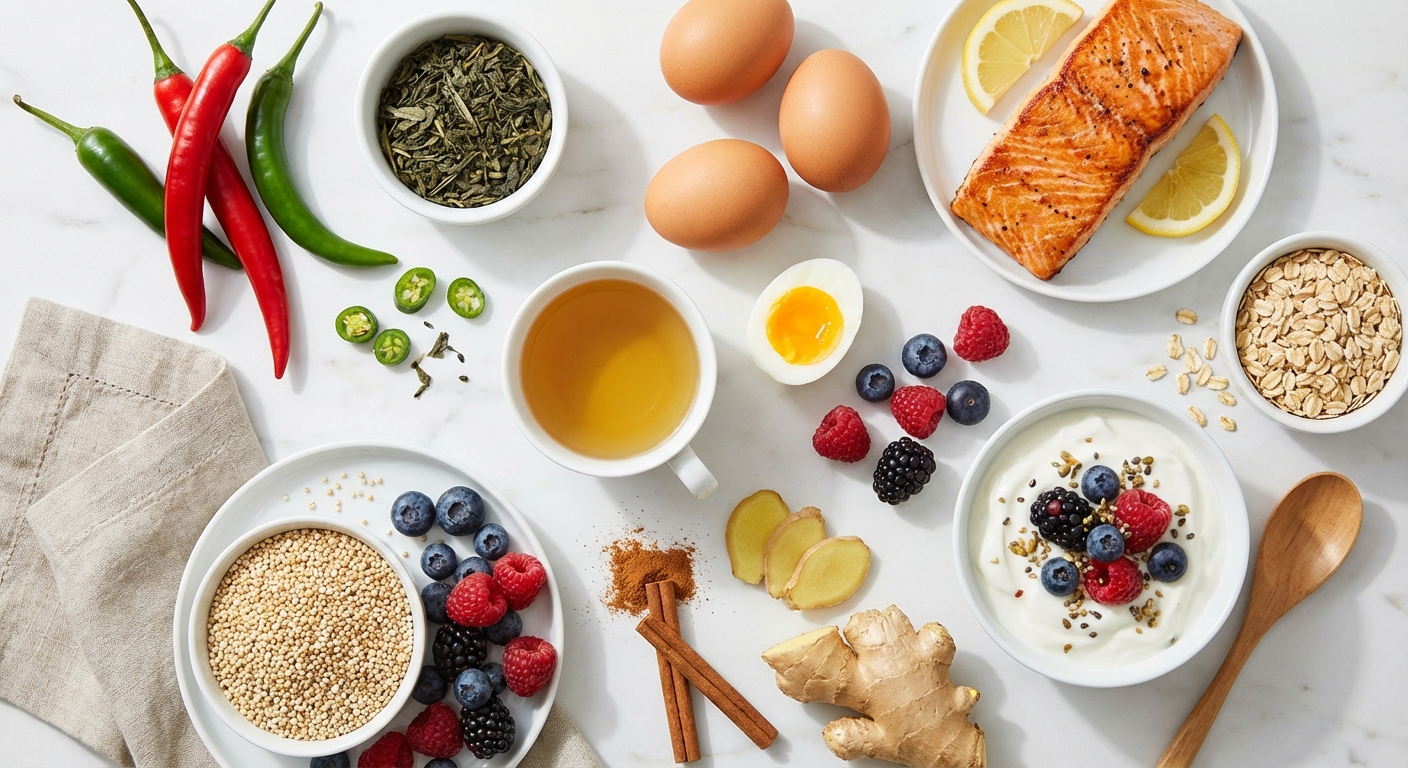
If you want to know which foods that boost metabolism and burn fat are actually worth eating, this list cuts through the noise. Some foods genuinely increase the rate your body burns calories. Others improve insulin sensitivity or enhance fat oxidation. A few do both. What none of them do is work overnight, but combined with consistent habits, the right foods make a real difference over weeks and months. Here is what the research actually supports.
Want to Give Your Metabolism Extra Support?
Pairing a metabolism-friendly diet with targeted supplementation may help your body burn fat more efficiently. Mitolyn is designed to support mitochondrial function, where your cells actually produce energy.
*Affiliate link - we may earn a commission at no extra cost to you
Why Certain Foods Boost Metabolism and Burn Fat
Before the list, a quick note on mechanism. Food affects metabolism in a few distinct ways: through the thermic effect of food (TEF, how many calories it takes to digest and process what you eat), thermogenesis (raising body temperature to burn more energy), fat oxidation (how well your body uses stored fat for fuel), and insulin sensitivity (how efficiently your body manages blood sugar, which directly affects fat storage). The foods below work through one or more of these pathways.
Get Weekly Health Tips
Join thousands getting evidence-based wellness insights delivered free every week.
🔒 No spam. Unsubscribe anytime.
15 Foods That Boost Metabolism and Burn Fat
1. Protein-Rich Foods
Protein has the highest thermic effect of any macronutrient, with your body burning up to 30% of protein calories just to digest them. That is roughly three times what fat and carbohydrates require. A study in the American Journal of Clinical Nutrition found that high-protein meals increased post-meal energy expenditure roughly twice as much as high-carb meals. Include eggs, chicken, Greek yogurt, lentils, or fish at every meal for the best metabolic lift.
2. Chili Peppers
Capsaicin, the compound that makes chili peppers hot, triggers thermogenesis. Your body temperature rises slightly, and your system burns more calories to compensate. A review in Appetite estimated capsaicin can add roughly 50 extra calories burned per day for regular consumers. That is not enormous, but it adds up across weeks. Red pepper flakes, cayenne, or fresh chilies all work. Add them wherever you can.
3. Green Tea
Green tea contains both caffeine and EGCG, a catechin that specifically enhances fat oxidation. Together, they push your body to use stored fat as fuel more readily than it otherwise would. A study in the American Journal of Clinical Nutrition found green tea extract increased 24-hour energy expenditure by around 4%. Two to three cups daily is a realistic target. Matcha delivers even more concentrated catechins if you want a stronger effect.
4. Coffee
Caffeine stimulates the central nervous system and increases resting metabolic rate (RMR) by 3-11% depending on dose and individual tolerance, according to research in Food Science and Biotechnology. It also directly promotes lipolysis, the breakdown of fat cells into free fatty acids your body can use for energy. Black coffee before a workout amplifies fat burning during exercise. Just skip the added sugar, which works against you.
5. Eggs
Eggs deliver high-quality complete protein plus healthy fats, and they score very high on the satiety index, meaning you eat less at subsequent meals. The protein alone triggers a significant thermic effect. Studies consistently show people who eat eggs for breakfast consume fewer calories across the rest of the day compared to those who eat refined-carb breakfasts of similar calorie counts. Two or three whole eggs in the morning is a genuinely powerful metabolic strategy.
6. MCT Oil
Medium-chain triglycerides get absorbed and converted into energy far faster than long-chain fats. That rapid processing has a thermogenic effect. A study in The American Journal of Clinical Nutrition found MCTs increased post-meal energy expenditure significantly more than long-chain triglycerides. Start with one teaspoon in coffee or a smoothie (larger amounts cause digestive issues for some people) and build from there. If you have noticed slow metabolism symptoms, MCT oil is one of the simpler additions to try first.
7. Fatty Fish
Salmon, mackerel, and sardines are rich in omega-3 fatty acids, which improve insulin sensitivity and reduce inflammation, both of which affect how your body stores and uses fat. They also deliver substantial protein for additional thermic effect. The combination makes fatty fish one of the most well-rounded metabolism-supportive foods. Two servings per week is a reasonable floor, and more is generally better for metabolic health.
Support Your Cells Where Fat Burning Actually Happens
Fat burning happens inside your mitochondria. Mitolyn is formulated to support mitochondrial efficiency, which may help your body convert more of what you eat into energy rather than storing it.
*Affiliate link - we may earn a commission at no extra cost to you
8. Greek Yogurt
Full-fat or 2% Greek yogurt gives you protein, probiotics, and calcium in a single food. The probiotics matter here: gut bacteria influence how many calories you absorb and how hormones related to appetite and fat storage function. A study in the British Journal of Nutrition found women taking a specific Lactobacillus strain lost significantly more weight than a control group. Greek yogurt is one of the most accessible ways to feed those beneficial bacteria daily.
9. Ginger
Ginger contains gingerols and shogaols, compounds with a modest thermogenic effect. A pilot study from Columbia University found that consuming a hot ginger beverage increased both thermic effect of food and feelings of satiety compared to a control drink. Ginger tea after meals or fresh ginger grated into stir-fries and soups is easy to maintain. The effect is real, if modest, and it compounds over time.
10. Whole Grains
Your digestive system has to work harder to break down whole grains compared to refined ones, which means a higher thermic effect and a slower glucose release. A study in the American Journal of Clinical Nutrition found people eating whole grains had a measurably higher resting metabolic rate than those eating refined grains, despite identical calorie intake. Swap white bread and white rice for oats, quinoa, and brown rice. It is one of the simplest dietary shifts with one of the clearest metabolic payoffs.
11. Berries
Berries are high in fiber (which slows digestion and moderates blood sugar) and polyphenols, particularly anthocyanins. These compounds have been shown to reduce fat cell size and promote fat oxidation in animal and human studies. A meta-analysis of 38 randomized controlled trials found berry consumption led to statistically significant reductions in BMI and body fat percentage. A cup of mixed berries daily with yogurt or oatmeal delivers meaningful benefit with minimal effort. If you are also working on natural appetite suppression, berries' fiber content contributes there too.
12. Apple Cider Vinegar
ACV works primarily through improving insulin sensitivity and lowering post-meal blood sugar, both of which support fat metabolism rather than fat storage. A 2024 study in BMJ Nutrition, Prevention and Health found participants consuming ACV daily for 12 weeks experienced significant reductions in body weight and BMI. One to two tablespoons in a glass of water before meals is the standard approach. It is not going to melt fat on its own, but it is a legitimate addition to a broader strategy.
13. Cinnamon
Cinnamon improves insulin sensitivity in a way that makes your body better at processing carbohydrates instead of converting them to stored fat. A meta-analysis in the Journal of Medicinal Food confirmed cinnamon intake was associated with a significant decrease in fasting blood glucose. Sprinkle half a teaspoon into oatmeal, coffee, or yogurt daily. It is one of those additions that costs almost nothing and carries no downside.
14. Water
This one surprises people. Drinking cold water triggers water-induced thermogenesis: your body burns calories warming the water to body temperature. A study in The Journal of Clinical Endocrinology and Metabolism found that 500ml of water increased metabolic rate by 30% for about an hour after consumption. Beyond thermogenesis, drinking water before meals consistently reduces calorie intake. For people trying to burn fat without exercise, adequate water intake is often the most overlooked tool available.
15. Seaweed
Brown seaweed contains fucoxanthin, a compound that in human studies has been shown to increase resting energy expenditure. A study in Diabetes, Obesity and Metabolism found that a fucoxanthin-based supplement raised resting energy rate in obese women with type 2 diabetes. Practical daily use means incorporating wakame into miso soup, nori into wraps, or spirulina into smoothies. The effect is real, though seaweed tends to be a supporting player rather than the star of any metabolism plan.
How to Use These Foods Together
The biggest metabolic gains come from combination, not single foods. High-protein meals create a sustained thermic effect throughout the day. Capsaicin and caffeine add thermogenic bursts. Fiber-rich foods from whole grains, berries, and legumes moderate blood sugar and feed gut bacteria. Omega-3s from fatty fish reduce the chronic inflammation that impairs fat burning over time.
Build meals around protein first. Add fiber from vegetables, whole grains, and berries. Include healthy fats from eggs, fatty fish, or MCT oil. Drink green tea or coffee without sugar. Add ginger, chili, and cinnamon wherever they fit. That framework covers most of the mechanisms on this list at once, and it is sustainable as a long-term eating pattern rather than a short-term fix.
For people whose metabolic function has slowed significantly, dietary changes alone may not be enough. Supporting mitochondrial health through targeted nutrition is worth exploring alongside these food-based strategies.
Bottom Line: Foods That Boost Metabolism and Burn Fat Are Tools, Not Magic
Every food on this list has real research behind it. None of them will transform your metabolism in a week, but most of them are things you can eat daily without any dramatic lifestyle overhaul. Protein at every meal, two to three cups of green tea, chili peppers in your cooking, fatty fish twice a week, whole grains instead of refined ones. Those changes, maintained consistently, produce real metabolic improvement over time. The foods are the foundation. What you build on top of that foundation is up to you.
Ready to Add Mitochondrial Support to Your Routine?
You have the food strategy. If you want to go a step further, Mitolyn supports the mitochondrial function that powers fat burning at the cellular level. Check the ingredients and decide if it fits your goals.
*Affiliate link - we may earn a commission at no extra cost to you
Research Sources
- American Journal of Clinical Nutrition: Protein thermic effect and metabolic rate studies
- NIH: Capsaicin and energy expenditure review
- PubMed: Green tea extract and 24-hour energy expenditure
- NIH PMC: Coffee, caffeine, and resting metabolic rate
- PubMed: Water-induced thermogenesis
- PubMed: Berry consumption and body composition meta-analysis