Disclosure: This post contains affiliate links. If you purchase through these links, we may earn a commission at no extra cost to you.
The best herbs for sleep and anxiety include valerian root, ashwagandha, passionflower, chamomile, lemon balm, lavender, and magnolia bark. Each one works through a distinct mechanism - some raise GABA levels, others lower cortisol, and a few do both. If you've tried melatonin and found it lacking, or you're looking for something that addresses the anxious mind that keeps you awake, these herbs for sleep and anxiety are worth understanding. Not all of them work the same way, and the evidence behind them varies. Here's what the research actually shows.
How do herbs for sleep and anxiety actually work?
Most sleep and anxiety drugs target one of two pathways: GABA receptors (the brain's main "off switch") or cortisol regulation (the stress hormone that spikes when you can't shut down). The best herbal options mirror these mechanisms without the dependency risks of benzodiazepines or the next-day fog of some prescription sleep aids.
Get Weekly Health Tips
Join thousands getting evidence-based wellness insights delivered free every week.
🔒 No spam. Unsubscribe anytime.
Some herbs - valerian, passionflower, lemon balm, and magnolia bark - primarily work on GABA. Others, like ashwagandha, work mainly through the HPA axis, reducing cortisol output from the adrenal glands. Chamomile and lavender hit both pathways to some degree. Knowing which mechanism applies helps you choose the right herb for your specific problem. Racing thoughts at 2 a.m. often call for a different approach than the physical tension of a stressed nervous system.
If you're also exploring non-herbal options, magnesium addresses sleep and stress through a complementary pathway and pairs well with several herbs listed here.
Valerian root: one of the most studied herbs for sleep and anxiety
Valerian (Valeriana officinalis) has been used as a sleep aid for centuries, but the modern research on it is mixed - and understanding why makes it more useful, not less.
The active compounds, valerenic acid and valepotriates, bind to GABA-A receptors, slowing down nervous system activity. A 2020 systematic review and meta-analysis (Shinjyo et al., PMC7585905) analyzed 60 studies covering 6,894 participants. It found that valerian improved subjective sleep quality and reduced anxiety scores, with stronger effects when whole root or rhizome was used rather than isolated extracts. The inconsistency in earlier studies likely came from variability in product quality.
A separate double-blind, crossover clinical trial (PMC8077445, 2021) found valerian significantly improved sleep quality, depression scores, and state anxiety in hemodialysis patients compared to placebo.
Typical dosage: 300-600 mg of standardized extract, taken 30-60 minutes before bed. Effects may take 2-4 weeks to build.
Best for: People who struggle to fall asleep due to a restless mind, or those with mild anxiety that interferes with sleep onset. Not ideal for those needing immediate, single-dose results.
Sleep Without the Struggle
Yu Sleep combines evidence-backed botanical ingredients to help calm your mind and ease into restful sleep - without habit-forming compounds.
*Affiliate link - we may earn a commission at no extra cost to you
Ashwagandha: best herb for stress-driven sleep problems
Ashwagandha (Withania somnifera) is an adaptogen, meaning it helps the body regulate its stress response rather than simply sedating it. This makes it particularly useful when anxiety and poor sleep both trace back to chronic stress and high cortisol.
A 2012 double-blind, randomized, placebo-controlled study (Chandrasekhar et al., PubMed 23439798) found that ashwagandha root extract significantly reduced morning cortisol (p < 0.001) and improved scores on stress and anxiety scales compared to placebo. A 2024 meta-analysis (PubMed 39348746) confirmed these results across multiple trials, showing meaningful reductions in Perceived Stress Scale scores (MD = -4.72), Hamilton Anxiety Scale scores, and serum cortisol levels.
On the sleep side, a double-blind placebo-controlled study (PubMed 32818573, 2020) found ashwagandha root extract significantly improved sleep onset latency (p = 0.013), sleep quality (p < 0.05), and anxiety scores in both healthy volunteers and insomnia patients. A 2021 PLOS ONE meta-analysis reached similar conclusions across five trials.
Typical dosage: 300-600 mg of standardized root extract (look for KSM-66 or Sensoril), taken daily. May take 4-8 weeks for full effect.
Best for: People whose sleep problems are clearly tied to work stress, burnout, or chronic anxiety - rather than isolated insomnia.
Ashwagandha pairs well with magnesium for sleep and stress, since both affect cortisol regulation and muscle relaxation through different mechanisms.
Passionflower: a quieter GABA booster
Passionflower (Passiflora incarnata) doesn't get the same attention as valerian or ashwagandha, but it has a clean track record in clinical research. Its primary mechanism is modulation of GABA-A receptors, which reduces neuronal excitability and promotes calm without heavy sedation.
A double-blind, placebo-controlled study published in Phytotherapy Research (Ngan and Conduit, 2011, PubMed 21294203) found that passionflower tea significantly improved sleep quality scores compared to placebo (p < 0.01) over one week. A more recent randomized, double-blind, placebo-controlled trial (PMC11026993, 2024) confirmed that Passiflora incarnata supplementation reduced stress scores and improved sleep quality in adults dealing with everyday stress.
One appealing feature: passionflower appears to reduce anxiety without impairing cognitive function or causing the morning grogginess sometimes associated with valerian.
Typical dosage: 300-400 mg of standardized extract before bed, or 1 cup of passionflower tea.
Best for: People with racing thoughts at bedtime who want mild, non-sedating relief. Also a reasonable option for situational anxiety like pre-presentation nerves or travel stress.
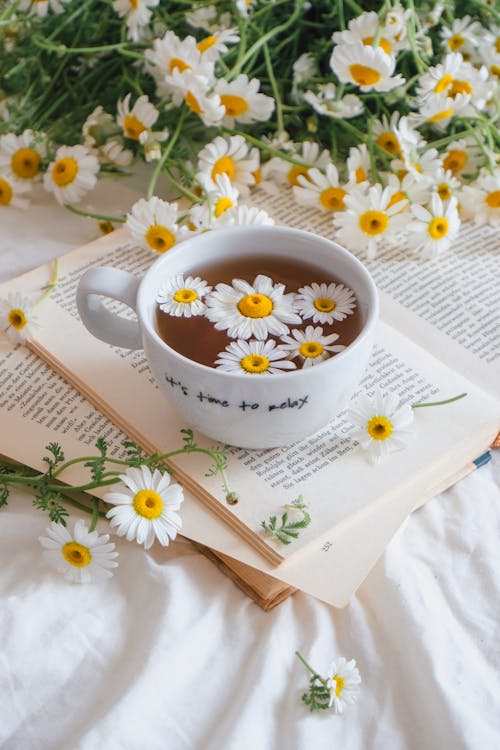
Chamomile: gentle, well-tolerated, and backed by real data
Chamomile (Matricaria chamomilla) is the herb most people already have in their kitchen. The research behind it is real, though modest in scale.
Its key compound, apigenin, binds to benzodiazepine receptors on GABA-A channels. A systematic review published in PMC (2024, PMC11109927) confirmed that clinical evidence points to apigenin's GABA receptor modulation as the mechanism behind chamomile's anxiolytic and sedative effects. A randomized, placebo-controlled pilot study on standardized chamomile extract for chronic primary insomnia (PMC3198755) showed participants fell asleep faster and woke less often at night.
Longer-term use shows more promise. A study in Phytomedicine (2016) found that chamomile extract significantly reduced generalized anxiety disorder (GAD) symptoms over 8 weeks, with some participants maintaining remission after stopping treatment.
Typical dosage: 220-400 mg of standardized extract (1.2% apigenin), or 1-2 cups of chamomile tea before bed.
Best for: Mild anxiety, occasional poor sleep, or anyone looking for a gentle starting point that's safe for most people.
Want a Formula That Does the Combining For You?
Yu Sleep is formulated with a synergistic blend of botanicals so you don't have to guess which herbs to stack or what dosages to use.
*Affiliate link - we may earn a commission at no extra cost to you
Lemon balm: the underrated GABA inhibitor
Lemon balm (Melissa officinalis) works differently from most herbs on this list. Rather than directly stimulating GABA receptors, it inhibits GABA transaminase (GABA-T) - the enzyme that breaks GABA down. The result: more GABA stays active in the brain for longer.
A study published in Phytotherapy Research (Awad et al., 2009, PubMed 19165747) identified lemon balm's methanol extract as a potent in vitro inhibitor of GABA-T. A 2021 meta-analysis (PubMed 34449930) reviewing randomized clinical trials found that lemon balm significantly reduced anxiety and depression symptoms, with a favorable safety profile. A 2023 prospective, double-blinded, placebo-controlled trial (PubMed 37927585) found that standardized lemon balm extract improved both emotional distress and sleep quality in healthy adults.
Lemon balm is also one of the few herbs studied in combination with valerian, where the combination outperformed either herb alone in some trials.
Typical dosage: 300-600 mg of standardized extract in the evening. For daytime anxiety, 150-300 mg can be taken without causing drowsiness.
Best for: Daytime anxiety with sleep spillover, or as part of a combination formula. Particularly useful for people who feel anxious but also mentally foggy.
If anxiety and overthinking are your main issue, it's worth also reading about NAC for anxiety and overthinking, which targets glutamate regulation - a completely different brain pathway.
Lavender: the herb with pharmaceutical-grade evidence
Lavender stands apart from most herbs on this list because of the volume and quality of its clinical evidence, particularly around Silexan - a patented oral lavender oil preparation tested in multiple randomized controlled trials.
A 2014 randomized, double-blind trial comparing Silexan to paroxetine (a common SSRI) and placebo in 539 adults with generalized anxiety disorder found that Silexan 80 mg significantly reduced Hamilton Anxiety Scale scores, with an effect size comparable to the prescription drug (Kasper et al., 2014, PubMed 24456909). A subsequent meta-analysis (PMC10465640) confirmed Silexan's efficacy across anxiety disorder trials. Improved sleep was a consistent secondary outcome.
The mechanism involves inhibition of voltage-gated calcium channels, reducing neuronal excitability through a pathway distinct from GABA. This means lavender can be combined with GABA-acting herbs without redundancy.
Typical dosage: 80 mg of Silexan (oral lavender oil). Topical or aromatic lavender shows weaker evidence for anxiety and sleep specifically.
Best for: People with generalized anxiety disorder looking for a well-researched botanical option. Also useful when other herbal options haven't delivered results.
Magnolia bark: for cortisol and sleep architecture
Magnolia bark (Magnolia officinalis) contains two bioactive compounds - honokiol and magnolol - both of which are positive allosteric modulators of GABA-A receptors. A study published in PMC (PMC3449263) found that honokiol specifically promoted non-rapid eye movement (NREM) sleep in mice via the benzodiazepine binding site on GABA-A receptors.
In human research, two clinical studies (Mucci et al., 2006; Kalman et al., 2008) found that magnolia and phellodendron bark extract reduced temporary anxiety and improved sleep in adults (PMC3652012). A pilot, double-blind, placebo-controlled clinical trial (PMC2359758) found that this combination significantly reduced salivary cortisol and self-reported stress in healthy women over 4 weeks.
The cortisol-lowering effect of magnolia bark complements its GABA activity, making it one of the few herbs that addresses both the neurological and hormonal sides of anxiety-driven sleeplessness.
Typical dosage: 200-400 mg of standardized magnolia bark extract (standardized to honokiol), taken in the evening.
Best for: People with high cortisol, stress-related insomnia, or those who wake in the middle of the night with anxious thoughts. Often used in combination formulas.
Timing your supplements matters. Understanding when to take magnesium for sleep can help you structure a full evening routine around these herbs.
Which herbs for sleep and anxiety should you try first?
The answer depends on what's keeping you awake.
Stress and high cortisol bleeding into the evening? Ashwagandha and magnolia bark are the best starting points. Racing thoughts and mental restlessness at bedtime? Valerian, passionflower, or lemon balm are more targeted. Generalized anxiety that also wrecks your sleep? Lavender (Silexan specifically) has the strongest clinical backing for that combination. Mild anxiety or a general reset? Chamomile is gentle enough to start with and won't interfere with most medications.
Many people find that a multi-herb formula delivers better results than single herbs, since these compounds often work synergistically. If you'd rather not build your own stack from scratch, a well-formulated product simplifies the process considerably. Before making changes, discuss with your doctor if you take other medications - some herbs interact with blood thinners and sedatives.
If melatonin hasn't been enough, its long-term side effects are worth knowing about too. These herbs for sleep and anxiety address underlying causes rather than just the sleep signal, which tends to produce more sustainable results.
Ready to Wake Up Actually Rested?
Yu Sleep brings together a precise blend of botanical sleep support so you can stop cycling through single-ingredient supplements and finally get consistent nights.
*Affiliate link - we may earn a commission at no extra cost to you
Research sources
- Shinjyo N, et al. "Valerian Root in Treating Sleep Problems and Associated Disorders - A Systematic Review and Meta-Analysis." Journal of Evidence-Based Integrative Medicine, 2020. PMC7585905
- Chandrasekhar K, et al. "A Prospective, Randomized Double-Blind, Placebo-Controlled Study of Safety and Efficacy of a High-Concentration Full-Spectrum Extract of Ashwagandha Root in Reducing Stress and Anxiety in Adults." Indian J Psychol Med, 2012. PubMed 23439798
- Lopresti AL, et al. "An Investigation into the Stress-Relieving and Pharmacological Actions of an Ashwagandha Extract." Medicine, 2019. PubMed 31517876
- Ngan A, Conduit R. "A Double-Blind, Placebo-Controlled Investigation of the Effects of Passiflora incarnata Herbal Tea on Subjective Sleep Quality." Phytotherapy Research, 2011. PubMed 21294203
- "The Effect of Oral Chamomile on Anxiety: A Systematic Review of Clinical Trials." 2024. PMC11109927
- Kasper S, et al. "Lavender Oil Preparation Silexan is Effective in Generalized Anxiety Disorder." Int J Neuropsychopharmacology, 2014. PubMed 24456909
- Awad R, et al. "Bioassay-Guided Fractionation of Lemon Balm for Anxiolytic Activity." Phytotherapy Research, 2009. PubMed 19165747
- Qu Z, et al. "Honokiol Promotes Non-Rapid Eye Movement Sleep via GABA-A Receptors." Pharmacol Biochem Behav, 2012. PMC3449263